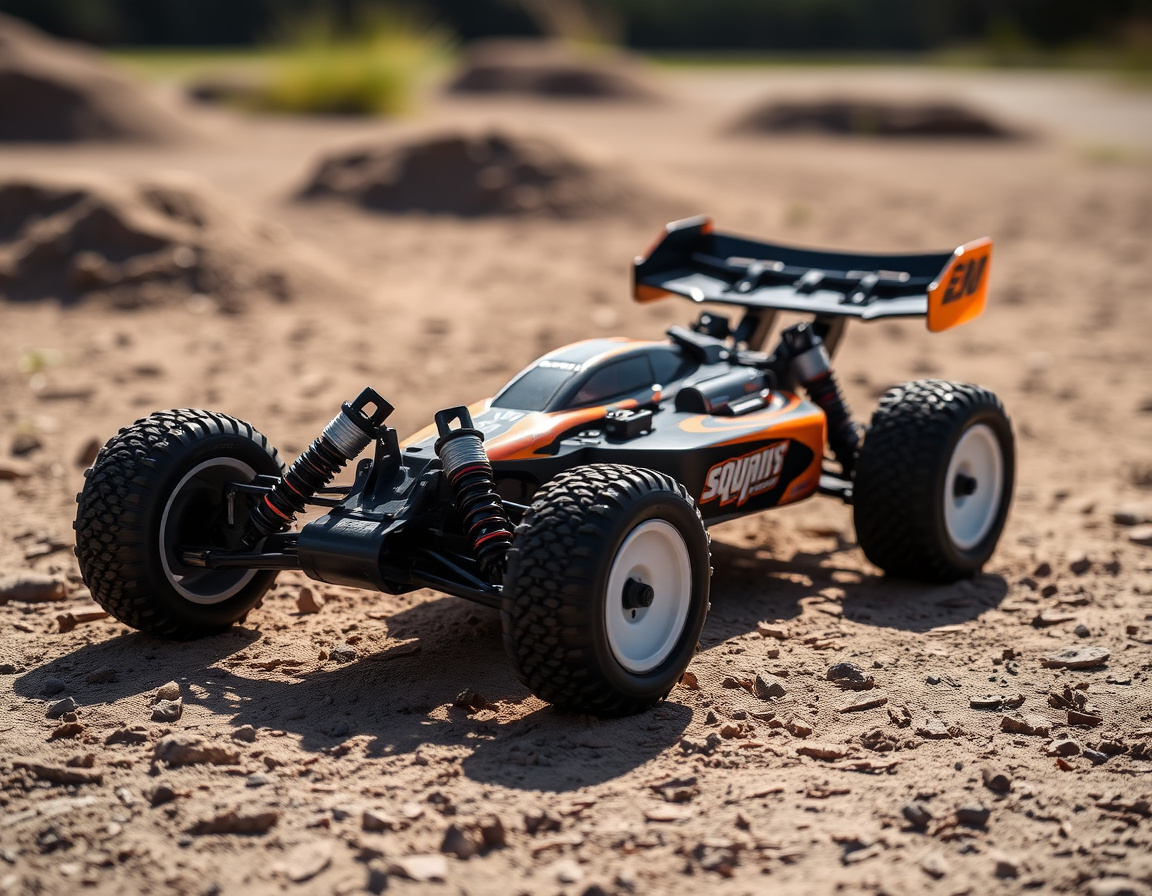
A 1/18 RC Buggy is a compact, scaled-down radio-controlled vehicle designed to mimic the performance and appearance of their full-sized off-road counterparts, built for navigating varied terrain and offering accessible, exciting RC racing and bashing fun.
Key Points
- 1/18 scale RC buggies offer a balanced performance and manageable driving experience.
- Their compact size makes them versatile for indoor and outdoor driving.
- Scaled speeds of 25 mph feel like 450 mph, offering thrilling realism.
- Shorter battery life (8-12 minutes) is common; purchasing extra batteries is recommended.
- These models are affordable gateway vehicles for new RC enthusiasts.
Why 1/18 RC Buggies Are Taking Over the RC World
1/18 scale RC buggies represent the perfect sweet spot in radio controlled vehicles, delivering serious performance in a compact, manageable package.
These miniature powerhouses have exploded in popularity because they offer the authentic RC experience without requiring massive storage space or dedicated outdoor areas for operation.
Their popularity stems from being incredibly versatile – you can race them indoors on carpet, tear up backyard terrain, or even take them to the office for lunch break fun.
The combination of affordability, convenience, and genuine RC thrills has made 1/18 buggies the gateway drug for countless enthusiasts entering the hobby.
The Scale Speed Secret That Will Blow Your Mind
Here’s something that surprises most buyers: a quality 1/18 scale buggy traveling at 25 mph is experiencing the equivalent of 450 mph at full scale – faster than most Formula 1 cars!
This scale speed effect means that even “slower” 1/18 models deliver an incredibly exciting and realistic racing experience that rivals much larger vehicles.
The physics of scale also work in your favor for jumps and stunts, as the smaller mass allows for more dramatic aerial maneuvers and quicker recovery from crashes.
This technical reality explains why seasoned RC veterans often prefer 1/18 scale for indoor racing and technical driving challenges.
The Battery Life Reality That Catches Everyone Off Guard
The biggest frustration new 1/18 RC buggy owners face is the surprisingly short runtime from stock battery packs, typically lasting only 8-12 minutes per charge.
This limitation becomes particularly annoying during group driving sessions or when you’re really getting into the groove of perfecting your driving skills.
The small size constraints mean manufacturers often include minimal capacity batteries to keep costs down, leaving buyers unprepared for the constant charging cycle.
Many owners discover they need multiple battery packs or upgraded power systems to enjoy extended driving sessions, which can add unexpected costs to their initial purchase.
What Your Wallet Should Expect for Quality Performance
Expect to invest between $50-$300 for a 1/18 scale RC buggy, with the sweet spot for solid performance landing around $100-$150.
Entry-level models under $75 typically feature basic electronics and plastic components suitable for casual indoor use, while the $150-$250 range offers hobby-grade components with metal gears, oil-filled shocks, and more powerful brushless motors.
Premium models exceeding $250 provide competition-ready performance with advanced features like adjustable suspension, high-capacity batteries, and precision-tuned handling characteristics.
The middle price range represents the best value for most buyers, offering genuine hobby-grade performance without the premium price tag.
The Battery Investment Strategy That Saves You Money
Smart buyers immediately purchase 2-3 additional battery packs along with their buggy to avoid the frustration of constant waiting for recharges.
This upfront investment of an extra $30-$60 transforms your RC experience from intermittent fun to continuous action, effectively tripling your drive time per session.
Look for batteries with higher capacity ratings (measured in mAh) than the stock pack, as the slightly higher cost pays dividends in extended runtime and reduced charging frequency.
Consider this battery investment as essential as the buggy itself – it’s the difference between a toy that sits on the shelf and a hobby that provides hours of entertainment.