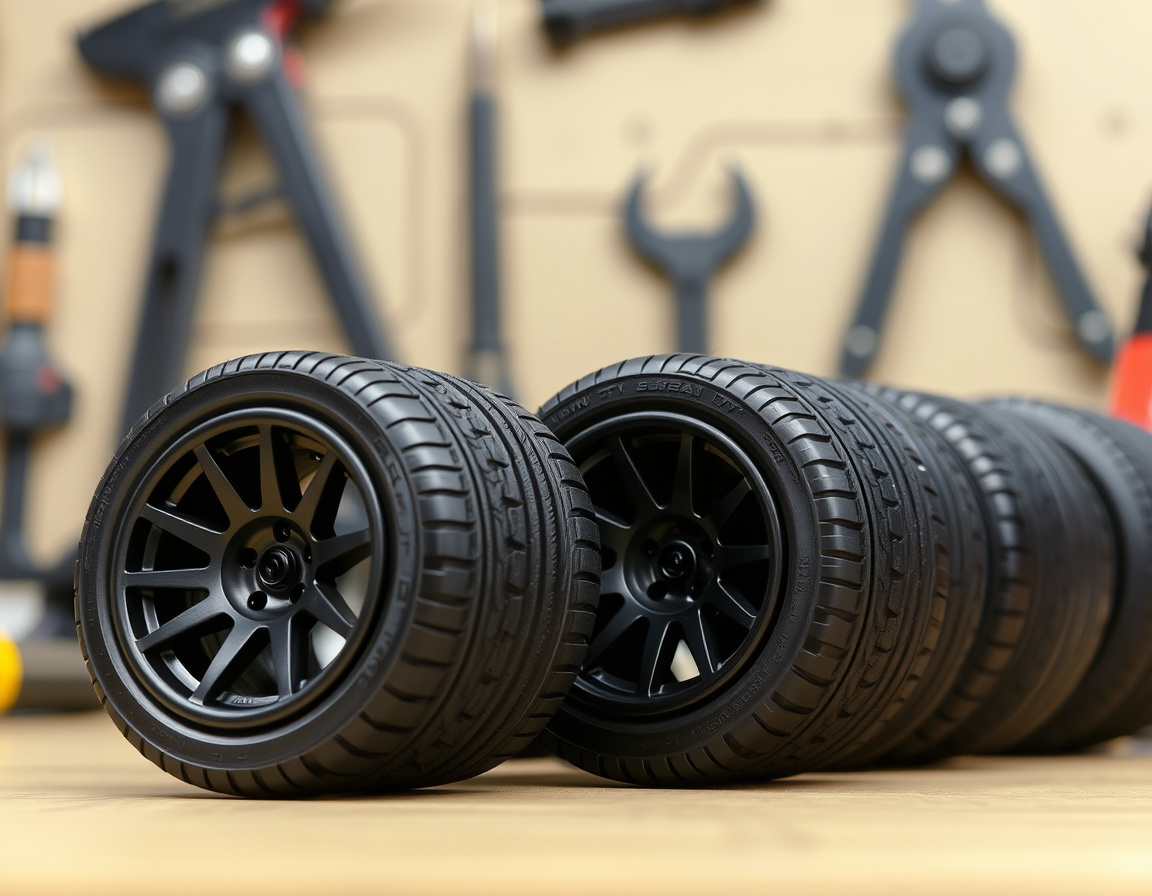
1/18 scale RC tires are the rubberized wheels that provide grip and traction for smaller radio-controlled vehicles, crucial for their performance on various surfaces.
Key Points
- 1/18 scale wheels and tires are crucial for RC car handling.
- Tire compound hardness greatly influences grip and wear.
- Softer tires offer more grip but wear out faster.
- Tire separation from rims is a common problem.
- Proper preparation enhances tire-rim adhesion and lifespan.
Essential 1/18 Scale Wheels and Tires: The Foundation of RC Performance
1/18 scale wheels and tires are critical components that directly impact your RC vehicle’s handling, traction, and overall performance on various surfaces.
These smaller-scale components have surged in popularity due to the growing demand for compact, indoor-friendly RC vehicles that don’t sacrifice performance for size.
The right wheel and tire combination can transform your driving experience, providing the grip needed for aggressive cornering, consistent acceleration, and reliable braking across different terrains from smooth concrete to rough carpet surfaces.
With 1/18 scale vehicles becoming increasingly sophisticated, enthusiasts are discovering that upgrading wheels and tires often delivers the most noticeable performance improvement per dollar spent.
The Compound Secret That Changes Everything
Most buyers don’t realize that tire compound hardness dramatically affects performance in ways that aren’t immediately obvious from product descriptions.
Softer compounds provide superior grip but wear faster and can actually slow your vehicle down on smooth surfaces due to increased rolling resistance, while harder compounds last longer and roll faster but may struggle for traction on dusty or textured surfaces.
This compound difference can mean the gap between a tire that performs amazingly for two weeks versus one that maintains decent performance for months.
Understanding this trade-off helps explain why some seemingly identical tires at similar price points can deliver vastly different experiences depending on your driving style and preferred surfaces.
Why Your Tires Keep Coming Apart
The most frustrating issue 1/18 scale enthusiasts face is tire separation from lightweight plastic rims during aggressive driving or impacts.
This problem occurs because the smaller scale means less surface area for the tire-to-rim bond, while the high power-to-weight ratio of modern 1/18 vehicles creates forces that can easily overcome basic adhesive connections.
The issue becomes particularly pronounced when switching between indoor and outdoor driving, as temperature changes cause different expansion rates between tire rubber and plastic rims.
Many drivers experience this failure just when they’re getting comfortable pushing their vehicle’s limits, leading to sudden performance drops mid-run.
Smart Spending for 1/18 Scale Wheel and Tire Performance
Expect to invest between $8 and $30+ for a complete set of four 1/18 scale wheels and tires, with the sweet spot for most enthusiasts falling in the $12-$25 range.
Basic plastic rim sets with standard rubber compounds around $8-$12 work perfectly for casual driving and learning, while mid-range options in the $15-$20 range typically offer better tire compounds and more durable rim construction that justifies the extra cost.
Premium sets exceeding $25 usually feature specialized compounds for specific surfaces, reinforced rim designs, or lightweight materials that provide measurable performance benefits for competitive drivers or those pushing their vehicles to the limits.
The Pre-Mounting Trick That Saves Money and Frustration
Before installing new tires, lightly sand the rim surface where the tire will contact and clean both surfaces with rubbing alcohol to ensure maximum adhesion strength.
This simple preparation step can double the lifespan of your tire-to-rim bond and prevent the common separation failures that force premature replacements.
Additionally, allowing newly mounted tires to sit for 24 hours before heavy use gives the adhesive time to fully cure, dramatically reducing the likelihood of failure during your first aggressive driving session when you’re most excited to test your new setup.